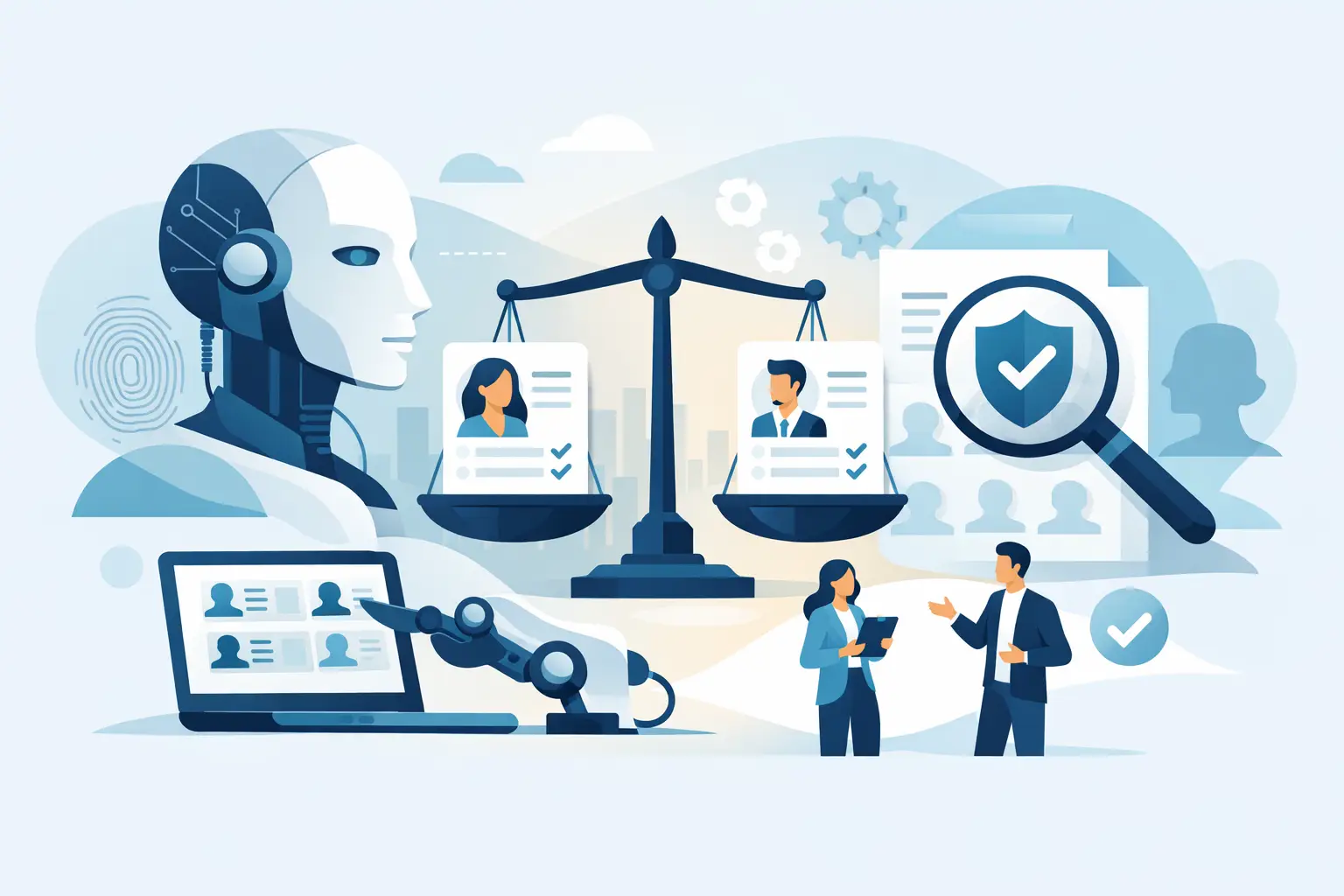
A recruiter with 800 new applicants does not need an algorithm to make a hiring decision. They need a faster way to find relevant evidence, apply the same standards to every resume, and show how the shortlist was built. That is the practical standard for EEOC compliant AI recruiting tools: technology that strengthens a fair, job-related process without taking control away from the people accountable for hiring.
The phrase can be misleading. The EEOC does not hand vendors a universal compliance certificate for AI recruiting software. Compliance depends on how an employer configures, uses, monitors, and governs the tool within its own hiring process. A platform can support a defensible workflow. It cannot turn vague requirements, inconsistent reviewers, or unchecked outcomes into a compliant process by itself.
What EEOC Compliance Means in AI Screening
For hiring teams, the question is not whether AI is involved. The question is whether the selection process remains job-related, consistently applied, accessible, and subject to meaningful human judgment.
Federal equal employment laws prohibit discrimination based on protected characteristics, including race, color, religion, sex, national origin, age, disability, and genetic information. AI can create risk when it uses proxies for those characteristics, makes unexplained recommendations, applies different standards across candidates, or produces adverse outcomes that no one measures.
A defensible AI-assisted screening workflow starts with defined criteria tied to the actual work. If a role requires managing a regional book of business, the screening standard should assess evidence of account ownership, territory management, revenue responsibility, or comparable work. It should not reward a familiar employer name, an exact phrase from the job posting, or a resume format that happens to parse well.
That distinction matters. Keyword filters often confuse language with qualification. Evidence-based screening asks what the candidate did, the scope of the work, and whether the experience meets the employer's stated threshold.
What to Look for in EEOC Compliant AI Recruiting Tools
The strongest tools make the hiring process easier to inspect. They do not ask recruiters to trust a black-box score and move on.
Employer-defined, job-related criteria
Start with a platform that lets your team define the requirements before it evaluates candidates. Criteria should reflect the role's real minimum and preferred qualifications, not a recycled job description packed with wish-list language.
This is where human expertise belongs. Recruiters and hiring managers decide what success requires. The AI should apply those standards consistently and point to the resume evidence supporting its assessment. If the criteria change, the system should make it possible to update and rerun the analysis rather than forcing your team into a static model.
Evidence behind every recommendation
A rank without a reason is not decision support. It is a prompt to overtrust automation.
Look for outputs that show why a candidate was ranked highly, what evidence supports that conclusion, and what gaps remain unresolved. An A-D ranking can help teams prioritize review, but only if each result includes a clear explanation tied back to the criteria. That record helps recruiters challenge the result, compare candidates fairly, and prepare focused interviews.
The same principle applies to lower-ranked applicants. A recruiter should be able to see whether a candidate lacked a required qualification, presented unclear evidence, or was simply a weaker match against defined standards. Those are very different outcomes, and they deserve different follow-up.
Human review that has real authority
Human-in-the-loop is not a compliance phrase to paste on a sales page. It means a person can understand, question, override, and act independently of the system's output.
The tool should prioritize information. Your hiring team should make the selection decision. Recruiters need the ability to review source material, correct a mistaken interpretation, advance a candidate despite a lower rank, and document why. That is especially important when resumes are incomplete, career paths are nontraditional, or candidates may need an accommodation in the hiring process.
JAN is built around this division of labor. It evaluates resumes against employer-defined criteria, presents the evidence, and generates targeted interview questions. The decision is yours.
Controls for sensitive and irrelevant information
A recruiting tool should not rely on protected-class information or obvious proxies to decide who advances. It should also help teams focus on relevant evidence rather than being swayed by names, photos, addresses, graduation dates, or other information that can introduce bias.
Blind screening options can reduce exposure to irrelevant personal details during initial review. They are not a substitute for sound criteria, but they are a useful control when paired with structured evaluation. Ask exactly what fields the vendor uses, stores, masks, and excludes from scoring. “We do not use bias” is not an operational answer.
Auditability, security, and retention controls
If you cannot reconstruct what happened, you cannot effectively investigate a concern or improve the process. Your system should preserve the criteria used, the resume materials reviewed, the output provided, reviewer actions, and the timing of changes.
Security matters just as much. Resumes contain personal information, and AI vendors should be clear about encryption, access controls, data handling, model training practices, and retention windows. Enterprise teams should also confirm how the tool works with their ATS and whether reporting can be shared with the people responsible for talent operations, legal review, and compliance.
The Workflow Matters More Than the Label
A vendor can claim its product is “EEOC compliant” while giving customers little visibility into the model, no control over criteria, and no way to review outcomes. That is not a workable standard for a serious hiring organization.
Use AI as one controlled step in a broader selection process. First, define the job-related qualifications and distinguish required criteria from preferences. Next, configure the screening review so the system evaluates evidence against those standards. Then, have recruiters review the explanations, validate important claims, and use targeted interview questions to test gaps and achievements.
Finally, monitor the process. Look beyond speed metrics and recruiter satisfaction. Track who applies, who advances, where candidates drop out, and whether outcomes suggest that a criterion, workflow, or tool configuration needs attention. If a selection procedure appears to create adverse impact, involve the appropriate HR, legal, and compliance stakeholders before treating the output as business as usual.
This is not a one-time vendor review. Job requirements evolve, applicant pools change, and local or state rules may add obligations beyond federal law. The appropriate controls depend on the role, the volume of hiring, the jurisdictions involved, and how much influence the tool has over the hiring process.
Questions to Ask Before You Buy
Ask vendors whether customers can define and revise their own screening criteria, and whether every result includes evidence from the candidate record. Ask how the product handles missing or ambiguous information, whether it can mask irrelevant personal details, and what actions human reviewers can take when they disagree with an output.
Also ask for direct answers on data. Is candidate information used to train models? Who can access it? How long is it retained? Can your organization export records for an audit or investigation? A credible provider will explain the limits of its system as clearly as its capabilities.
One more question separates practical tools from flashy ones: Can the platform help recruiters discover qualified people who do not mirror the job posting word for word? The best systems expand access to relevant talent by recognizing comparable experience, while still holding every candidate to the same defined standard.
AI Should Make Your Process More Defensible
The value of AI recruiting software is not that it replaces judgment. Its value is that it gives judgment a better operating system: consistent criteria, visible evidence, documented reasoning, and more time for real evaluation.
Choose a tool that makes your process easier to explain to a hiring manager, a candidate, and your own compliance team. When a recruiter can show what the role required, what the candidate demonstrated, and where human judgment shaped the next step, speed and accountability can work together.